Nils Hansen · 9 September 2026
Pioneer Narratives Spark Youth-Led Biodiversity Tracking Amid Watershed Changes
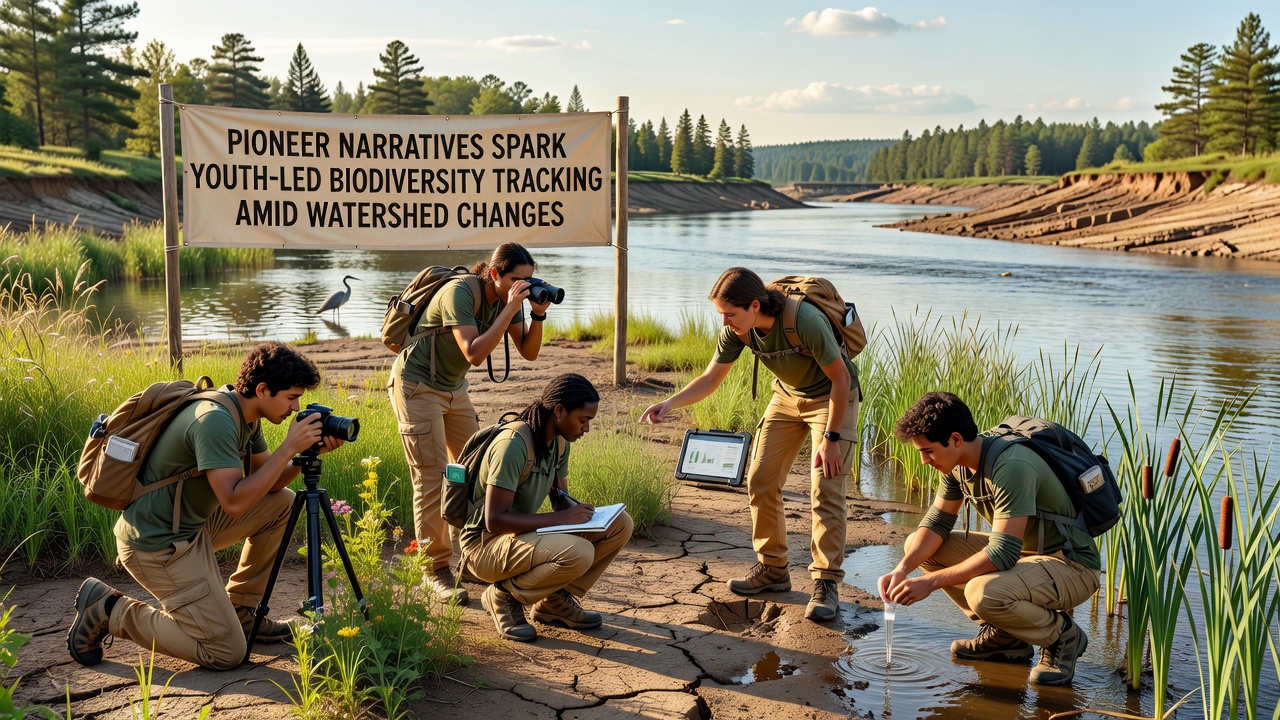
Historical accounts from early settlers along North American river systems describe abundant fish runs, diverse plant communities, and seasonal migrations that shaped local ecosystems, and these records now serve as baseline data for contemporary monitoring efforts. Researchers have cross-referenced pioneer journals with modern surveys to identify shifts in species composition within multiple watersheds, where altered precipitation patterns and land use changes have modified habitats since the nineteenth century. Youth groups in several states have adopted these narratives to guide field protocols that combine archival review with real-time observations collected through standardized apps and sensor networks.
Connecting Historical Records to Current Monitoring
Diaries and survey notes from the 1800s frequently mention specific salmonid populations, wetland plant distributions, and bird nesting sites that correspond to today's priority monitoring zones, allowing direct comparisons over decades. When teams compile these entries into geospatial databases, patterns emerge that show declines in certain native species alongside increases in others that tolerate warmer water temperatures or reduced flow volumes. Programs operating in the Pacific Northwest and Great Lakes basins have trained participants to verify historical claims against present conditions using transect sampling and eDNA analysis, producing datasets that state agencies incorporate into restoration planning.
September 2026 will mark the launch of a coordinated youth data exchange hosted by regional conservation districts, where participants will upload findings to a shared platform that also hosts digitized pioneer manuscripts. This timing aligns with federal updates to watershed assessment guidelines scheduled for release the same month, giving programs an opportunity to align their methods with new reporting standards.
Youth Programs Expand Across Regions
School-based clubs and nonprofit organizations have scaled field days into year-round initiatives that pair students with professional ecologists for multi-week surveys. Participants learn to identify macroinvertebrates, measure canopy cover, and log water chemistry readings while maintaining chain-of-custody protocols required for submissions to government repositories. In one Midwest county, a cohort of high school volunteers documented a 23 percent reduction in certain mayfly genera compared with settler-era descriptions, prompting local authorities to adjust buffer strip requirements along tributary streams.
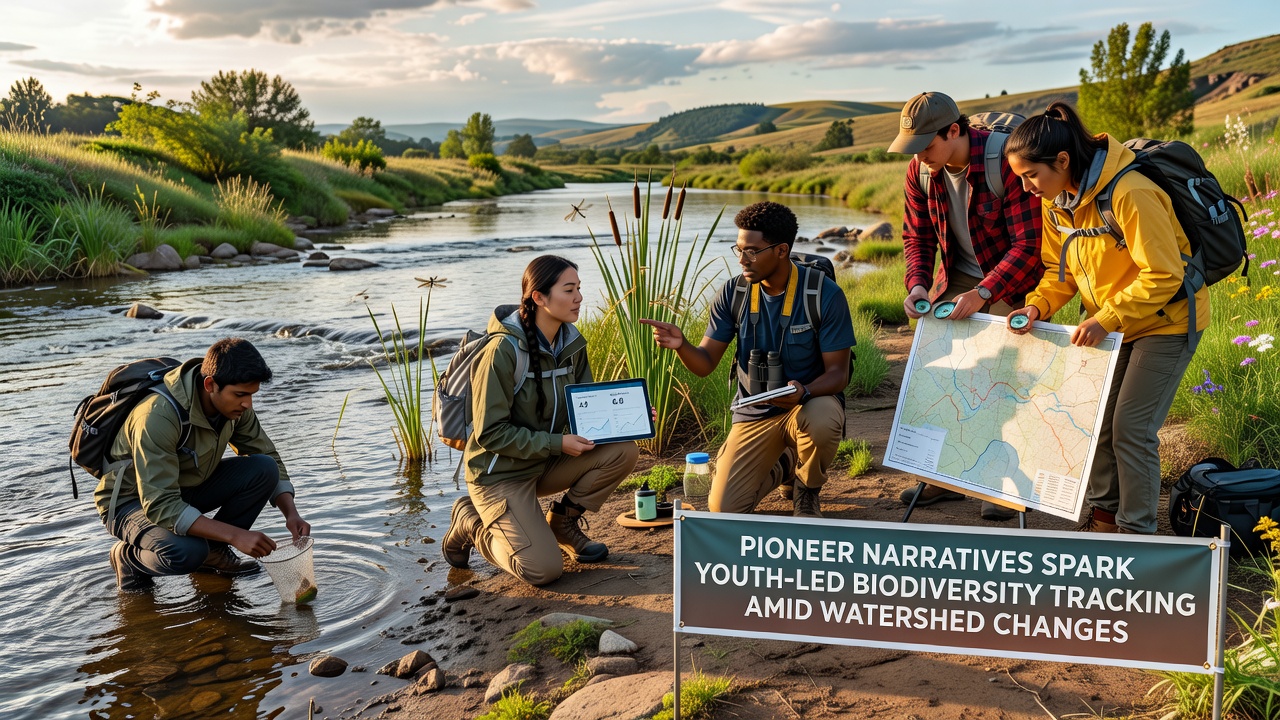
Training materials emphasize repeatability so that successive student groups can replicate measurements at fixed locations, building longitudinal records that span multiple years. Partnerships with universities supply laboratory access for genetic barcoding, confirming species identifications that pioneer writers described only by common names. Data compiled through these efforts appear in annual reports issued by the U.S. Environmental Protection Agency and feed into models maintained by the U.S. Geological Survey that forecast habitat suitability under different climate scenarios.
Technology and Archival Integration
Mobile applications developed by academic teams allow users to overlay georeferenced excerpts from settler accounts directly onto satellite imagery and topographic maps, highlighting locations where narrative descriptions diverge from current conditions. Participants flag anomalies such as absent tree species or altered stream morphology, then schedule follow-up visits with calibrated equipment. These workflows reduce observer bias by requiring multiple independent verifications before entries advance to permanent databases. European Environment Agency protocols for citizen science have influenced several U.S. programs, particularly in metadata standards that ensure interoperability across borders when transboundary watersheds are involved.
Funding for equipment and training has come from a mix of state grants, corporate sponsorships, and foundation awards tied to specific river basins. Organizations such as the National Wildlife Federation have supplied curriculum modules that integrate pioneer text analysis with quantitative ecology, giving participants context for why certain indicator species matter to overall watershed health.
Outcomes and Data Contributions
Compiled records from youth-led surveys have already informed permitting decisions for infrastructure projects near sensitive riparian zones, where modeled projections now incorporate both archival and contemporary datasets. Peer-reviewed papers drawing on these combined sources have appeared in journals focused on freshwater ecology, documenting range contractions and expansions that align with temperature and flow records maintained since the mid-twentieth century. Observers note that the volume of validated observations submitted by participants under age twenty-five has risen steadily, reflecting both improved access to training and greater comfort with digital collection tools.
Conclusion
Archival pioneer narratives continue to supply spatial and temporal anchors that modern monitoring programs use to quantify biodiversity shifts across watersheds. Youth involvement has accelerated data collection while introducing standardized methods that support long-term trend analysis. As September 2026 approaches, expanded platforms and updated federal guidelines will further integrate these efforts into broader environmental reporting systems, sustaining the connection between historical observation and present-day stewardship.